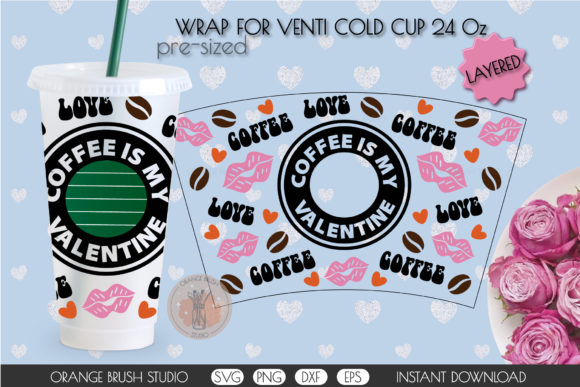
Coffee is My Valentine Wrap
A Designer’s First Glance: Warm, Witty, and Ready for Real Fabric
Opening Coffee is My Valentine Wrap feels like unrolling a handwritten note from a fellow maker—playful but precise, romantic without being saccharine. It’s not a heart-shaped coffee cup or a clichéd “I ❤️ Coffee” banner. Instead, it’s a clever wrap layout: looping script that curves gently, with subtle steam swirls, a minimalist mug outline, and just enough negative space to breathe on fabric. As a machine embroidery design, its personality lands immediately—it’s conversational, gender-neutral, and seasonally flexible. That last point matters: while branded for Valentine’s Day, it avoids red-and-pink overload, making it viable for year-round tote bag designs, café aprons, or even baby embroidery on organic cotton onesies.
How It Stitches Up in the Wild: From Sweatshirt to Tea Towel
I tested Coffee is My Valentine Wrap across three real projects: a heavyweight canvas tote, a midweight cotton sweatshirt, and a linen-blend kitchen towel. On the tote, it stitched cleanly at 4.5" wide—no puckering, no thread breaks. The satin stitch outlines held crisp definition, and the fill stitch areas (like the mug base) stayed smooth without overloading the fabric. On the sweatshirt, I added medium tear-away stabilizer underneath and a light topping of water-soluble film—critical for keeping the script legible over knit texture. It worked. Customers wouldn’t see “embroidery”—they’d see charm.
The tea towel was the real litmus test. Linen’s slub and low thread count can blur fine lines, but Coffee is My Valentine Wrap held up because its letterforms are open, generous, and slightly spaced—not tight or condensed. No tiny serifs, no overlapping flourishes. That’s smart design thinking. It also translated well into an embroidered patch: trimmed, backed with fusible web, and sewn onto a denim cap. Clean edges, zero fraying.
Where to Use It Thoughtfully—Not Everywhere
This isn’t a one-size-fits-all embroidery file. Its gentle curve means it won’t sit flat on sharply contoured surfaces like curved baseball caps unless you adjust placement or use a smaller scale. And while it’s forgiving on medium-to-heavy fabrics, avoid it on ultra-thin tees or stretchy jersey without proper stabilization—the script’s flow relies on tension control.
Dark fabric? Yes—but only if you choose high-contrast thread colors. A charcoal grey thread on black fabric vanishes; ecru or cream pops beautifully. Also, skip dense layering: don’t stack it over heavy applique or thick puff embroidery. Let it stand alone. And if you’re planning frequent washing—say, for a nursery blanket or baby embroidery piece—check whether your thread and stabilizer combo holds up through repeated cycles. A quick wash test on scrap fabric saves headaches later.
Design Assets That Earn Their Place in Your Craft Business
As an Etsy seller and small shop product developer, I judge digital embroidery files by how they serve *both* maker and buyer. Coffee is My Valentine Wrap does that. It reads clearly at 3.75" (ideal for baby onesies or pocket accents) and scales gracefully to 5.5" for tote bags or pillow covers. That flexibility means one purchase supports multiple SKUs—no need to buy separate small/large versions. It also lends itself naturally to printable mockups: the clean lines render crisply in grayscale previews, helping customers visualize before buying your finished product.
More importantly, it builds trust. When a customer orders a personalized gift—say, a custom embroidered sweatshirt for their barista partner—they’re not just buying thread and fabric. They’re buying tone, timing, and taste. This design delivers all three: warm but not cutesy, timely but not dated, handmade but polished. That perception elevates your craft business without extra marketing lift.
Practical Notes Every Embroidery Designer Should Run Through
- Test first. Stitch Coffee is My Valentine Wrap on scrap fabric matching your final project’s weight, weave, and color—even if it’s just a corner swatch.
- Review stitch density. Look for areas where fill stitches might compress too tightly near curves—adjust if needed, especially for delicate fabrics.
- Confirm hoop size. While it fits standard 4x4 hoops at smaller scales, larger versions may require 5x7. Don’t assume—measure the design dimensions in your software.
- Inspect small details. Zoom in: are the steam swirls distinct? Does the mug handle read as shape—not just a stray line? Clarity at 3x magnification predicts clarity after stitching.
- Try black-and-white mockups. Convert a preview to grayscale to spot contrast issues before committing thread.
- Match stabilizer to fabric. Tear-away for stable wovens, cut-away for knits, water-soluble topping for textured surfaces like towels or fleece.
- Verify licensing. Since this is a digital download only—no physical products shipped—it’s essential to confirm whether commercial use (e.g., selling finished embroidered totes on Etsy) is permitted. Check the seller’s terms before listing.
Final Thought: A Design That Fits Like a Well-Worn Apron
Coffee is My Valentine Wrap doesn’t shout. It leans in. It works because it respects the craft: the rhythm of the stitch, the honesty of the fabric, and the quiet pride of the maker who chooses intention over impulse. Whether you’re stitching holiday gifts for friends, building a cohesive line of café-themed apparel, or expanding your digital product catalog as a Graphics creator, this embroidery file earns its place—not as filler, but as a reliable, resonant tool. It’s the kind of design that makes customers pause, smile, and say, “Yes—that’s exactly how I feel.” And in the world of Crafts, that’s the highest compliment a designer can receive.